JAPAN PRIVÉ Crest
JAPAN PRIVÉ
Curated Luxury & Etiquette Guide
🎐 Etiquette
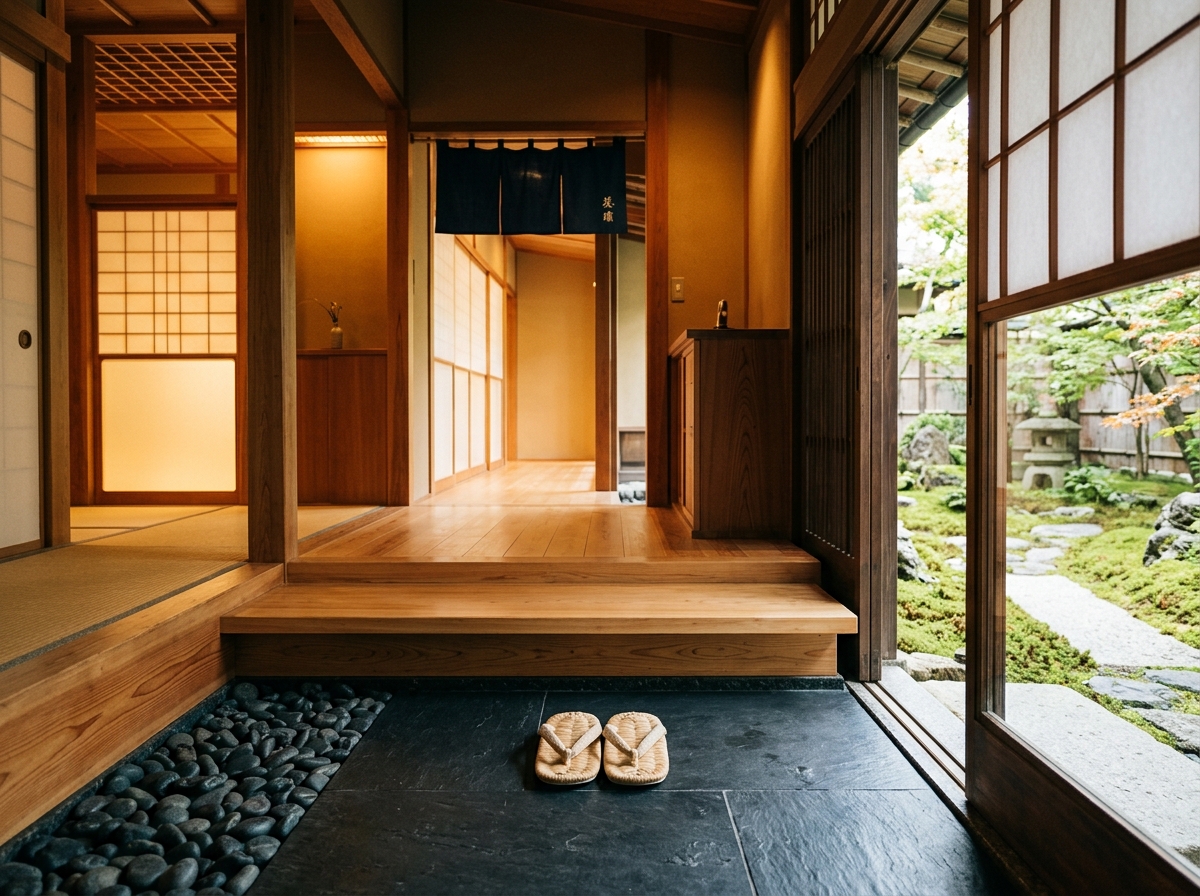
Traditional Japanese Ryokan Entranceway and Moss Garden
← Back to JAPAN PRIVÉ Home Illustrated Edition · Updated 10月 23, 2026
🎐 The Illustrated Cultural Handbook for Discerning Guests

Essential Japan Etiquette & Cultural Savvy Bible

Japan is one of the world’s most gracious destinations—yet its deepest traditions operate on unspoken codes of harmony (Wa) and purity. Explore our illustrated visual guide to the 6 pillars of Japanese etiquette below, and see how private charters and secluded suites eliminate tourist friction.

Visual Pocket Reference

The 60-Second Japan Etiquette Check: 6 Do’s & 6 Don’ts

Before stepping onto a traditional Ryokan tatami floor, Michelin sushi counter, or Kyoto sanctuary, keep these twelve golden principles in mind.

Traditional Japanese Ryokan Genkan Entrance and Slippers 🏯 The "Genkan" Footwear Rule
Illustrated Rule #1 · Indoor Purity vs. Outdoor Shoes

How to Navigate the Japanese "Genkan" Step & Tatami Rooms

Whenever you see a raised wooden threshold (Agari-kamachi) at a Ryokan, temple, tea house, or traditional restaurant, remove your street shoes on the lower stone floor before stepping up onto the polished wood.

1. Stone Entry (Tataki) Step out of street shoes onto the raised wood
2. Wood Hallways Wear provided house slippers in corridors
3. Woven Tatami Mats Clean socks or bare feet only (no slippers!)
✓ Cultural Grace

6 Things Discerning Guests Always Do

✓
🧦
1. Wear Easy Slip-On Shoes & Pristine Socks You will remove shoes at ryokan entrances, temple halls, tea houses, and traditional Kaiseki dining rooms. Never step on tatami mats with shoes or slippers.
🚿
2. Wash & Rinse Seated Before Entering Any Onsen In Japanese hot springs, the bath is for soaking, not washing. Sit on the low wooden stool to soap and rinse your body completely before stepping into the mineral water.
⌚
3. Arrive 5–10 Minutes Early for Dining & Charters Japanese trains, helicopters, and Omakase counters operate to the exact minute. Arriving slightly early shows deep respect for your chef, pilot, or host.
💳
4. Place Cash or Cards on the Small Checkout Tray Rather than handing money directly hand-to-hand, place your credit card or cash onto the small wooden or leather tray (Karuton) by the register.
💴
5. Carry Crisp Notes & a Small Coin Pouch While luxury hotels and boutiques accept contactless cards, centuries-old temple admission booths, shrine offerings (¥5 or ¥50 coins), and artisan workshops still prefer cash.
🩴
6. Switch Restroom Slippers Back After Use Traditional ryokans and restaurants provide dedicated "restroom slippers" inside the washroom door. Remember to swap back into your regular house slippers when exiting!
✕ Faux Pas to Avoid

6 Mistakes That Instantly Stand Out

✕
🚫
1. Never Wear Perfume or Cologne to Omakase or Tea Ceremonies Japanese haute cuisine and Chado (Way of Tea) celebrate delicate seasonal aromas—fresh wasabi, yuzu, dashi, and fragrant hinoki counters. Many top Michelin sushi chefs expressly refuse entry to perfumed guests.
🍡
2. Avoid Walking While Eating ("Tabearuki") on Historic Streets In Kyoto’s Gion, Arashiyama, or Nishiki Market, walking with open food or drinks is frowned upon to protect silk kimonos and historic storefronts. Enjoy your snack standing right beside the vendor stall.
💵
3. Never Leave Loose Cash Tips on Restaurant Tables Hospitality (Omotenashi) is a point of pride, not a tipped transaction. Leaving bills on a table causes confusion—servers will run after you down the street thinking you forgot your change.
🥢
4. Never Stand Chopsticks Upright in Rice or Pass Food Chopstick-to-Chopstick Both gestures mirror traditional Buddhist funeral rites. Always rest your chopsticks horizontally on the ceramic holder (Hashi-oki) when not in use.
📸
5. Never Stop or Photograph Geiko & Maiko on Kyoto’s Private Lanes Gion’s private alleys enforce a ¥10,000 fine for unauthorized photography. To enjoy Geisha artistry up close and take photos respectfully, book a private Ozashiki banquet or tea salon.
🧳
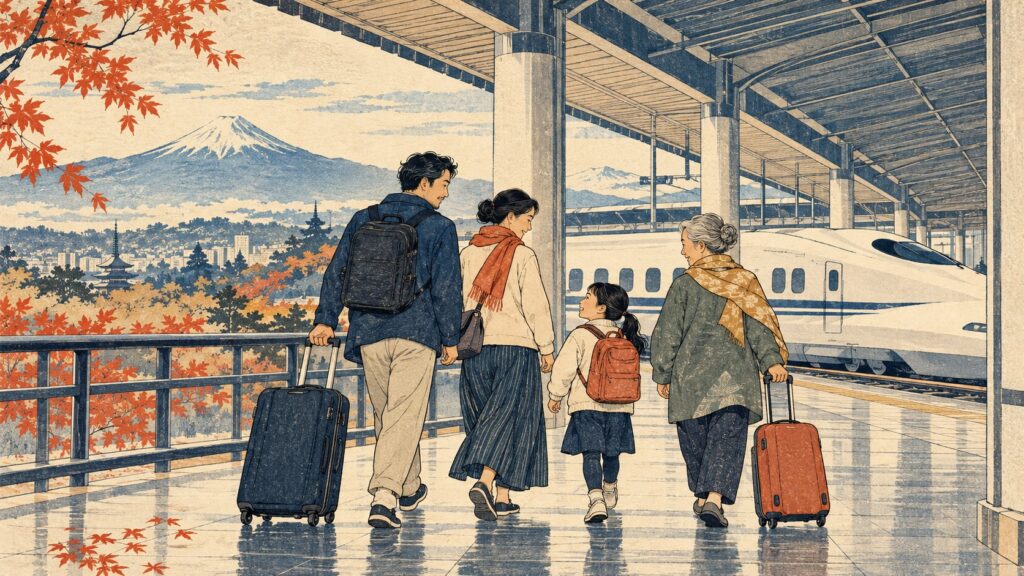
6. Don’t Board the Shinkansen with Unreserved Oversized Suitcases (>160cm) Large check-in suitcases (total L+W+H over 160cm) require a special reserved seat on bullet trains—or better yet, a door-to-door private luxury van charter.
Chapter 01 · Hot Springs & Body Art

Onsen Etiquette & Why Public Baths Ban Tattoos & Swimsuits

♨️ #1 First-Timer Question
🎨 Illustrated Guide · The 4-Step Traditional Onsen Ritual
Step 1 · Zero Swimsuits

Undress completely in the locker room. Swimwear is never permitted in communal baths.

Step 2 · Seated Shower

Sit on the low wooden stool to wash and rinse off all soap before entering the bath.

Step 3 · Towel on Head

Keep your small towel & hair out of the spring water—place the folded towel on your head.

Step 4 · Private Rotenburo

Have tattoos or traveling as a couple? Book an in-room private cypress bath for zero restrictions.

Soaking in a natural volcanic hot spring (Onsen) is the quintessential Japanese luxury ritual. However, first-time international guests are often surprised by three strict communal bathhouse rules:

  • No Swimsuits Permitted: All communal baths are entered completely unclothed. Fabric fibers and laundry detergents are considered contaminants to pure geothermal spring water.
  • Visible Tattoos Are Restricted (~80% of Public Baths): Due to historical associations in Japan, most traditional public onsens and hotel communal spas deny entry to guests with tattoos (unless small enough to conceal beneath a waterproof skin patch).
  • Gender-Separated Wings: Men (marked 男 with a blue curtain) and women (marked 女 with a red curtain) bathe separately—meaning couples and families cannot soak together in public baths.

Shared Communal Bath vs. Private In-Room Rotenburo Suite

Factor Public Communal Onsen Private In-Room Rotenburo Suite
Tattoos Restricted at ~80% of venues ✓ 100% Welcome in Your Private Bath
Couples & Families Separated by gender ✓ Soak Together on Your Veranda
Hours Closed at night for cleaning ✓ 24/7 Access at Dawn, Sunset & Starlight
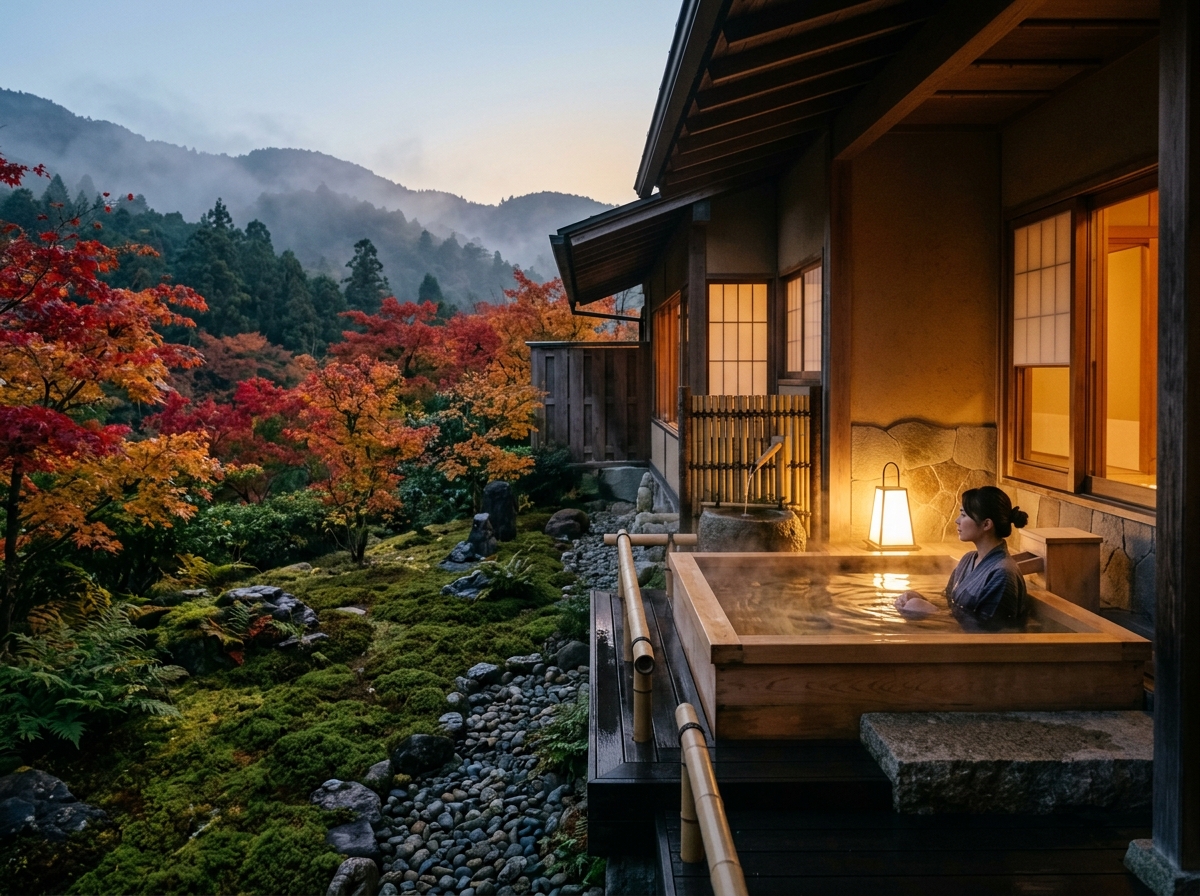
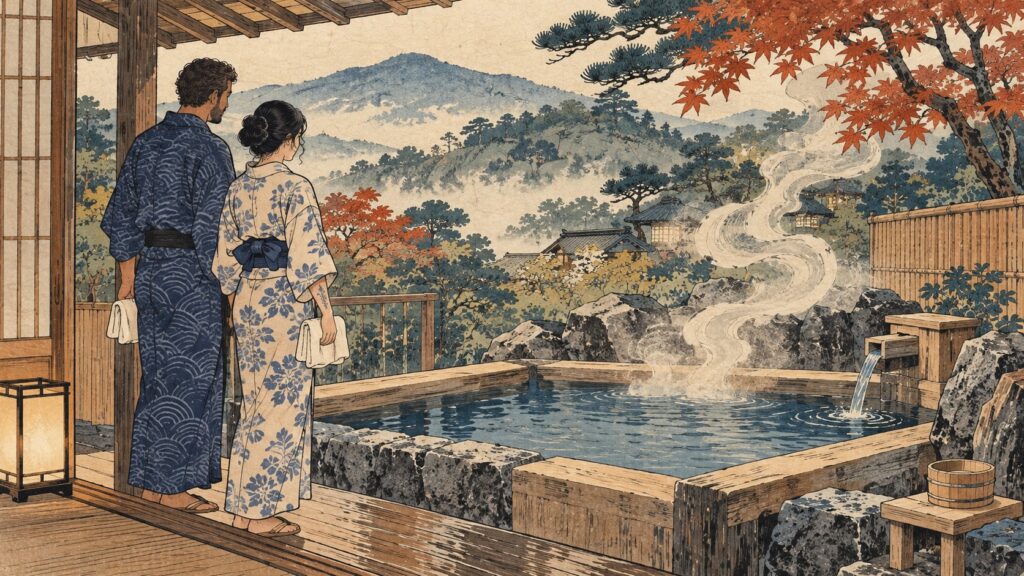
Private Hinoki Open-Air Rotenburo Suite overlooking Mt. Fuji ✦ Curated Sanctuary
✦ The JAPAN PRIVÉ Solution

Reserve a Luxury Suite with a Private Open-Air Bath (Rotenburo)

Whether you have tattoos, are celebrating a honeymoon, or prefer complete seclusion, booking a suite with an in-room Hinoki cypress open-air bath lets you enjoy 100% natural hot spring water on your private terrace—any hour of the day or night.
Chapter 02 · Bullet Trains & Luggage Logistics

The Shinkansen 160cm Luggage Rule & Multi-Level Station Reality

🚄 Crucial Logistics Tip
📐 Illustrated Guide · How JR Bullet Trains Measure Your Suitcase (L + W + H)
Under 160 cm Total

Carry-on & medium bags (Height + Width + Depth ≤ 160cm) fit in overhead racks without special booking.

160 cm – 250 cm (Large Check-In)

Mandatory advance "Oversized Baggage Seat" required on Shinkansen (¥1,000 fine if unreserved).

Private Chauffeur MPV

Zero size limits: fits up to 6 large suitcases directly from your hotel lobby door-to-door.

Japan’s Shinkansen (bullet train) is a marvel of engineering, but traveling with full-size international check-in suitcases or multi-generational family members comes with strict rules and physical hurdles:

  • Mandatory 160cm Oversized Baggage Reservation: On the Tokaido, Sanyo, and Kyushu Shinkansen (Tokyo–Kyoto–Osaka–Hiroshima), any suitcase whose Length + Width + Height exceeds 160 cm (63 inches) requires a specific advance seat reservation with an Oversized Baggage Area (typically only the last 5 seats of each car).
  • Quiet Cabin Etiquette: Phone calls are never taken at your seat (always step into the deck vestibule between cars), and seats should only be reclined after a polite glance and nod to the passenger behind you.
  • Station Stairs & Transfer Crowds: Reaching sanctuaries like Hakone, Lake Kawaguchiko, Nikko, or Kyoto’s Arashiyama by rail requires 2–3 train/bus transfers through sprawling stations where elevators can be a 10-minute walk away.
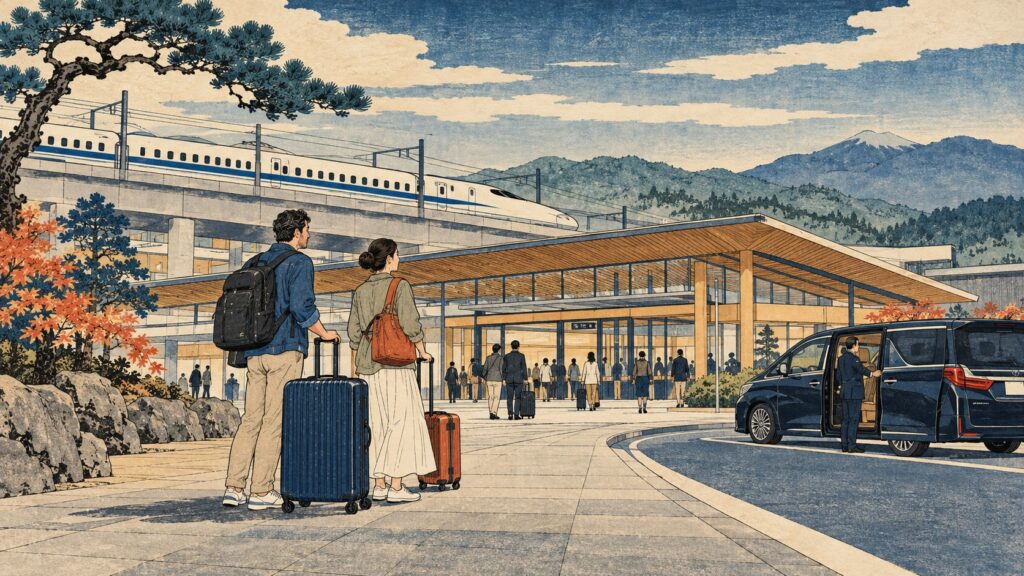
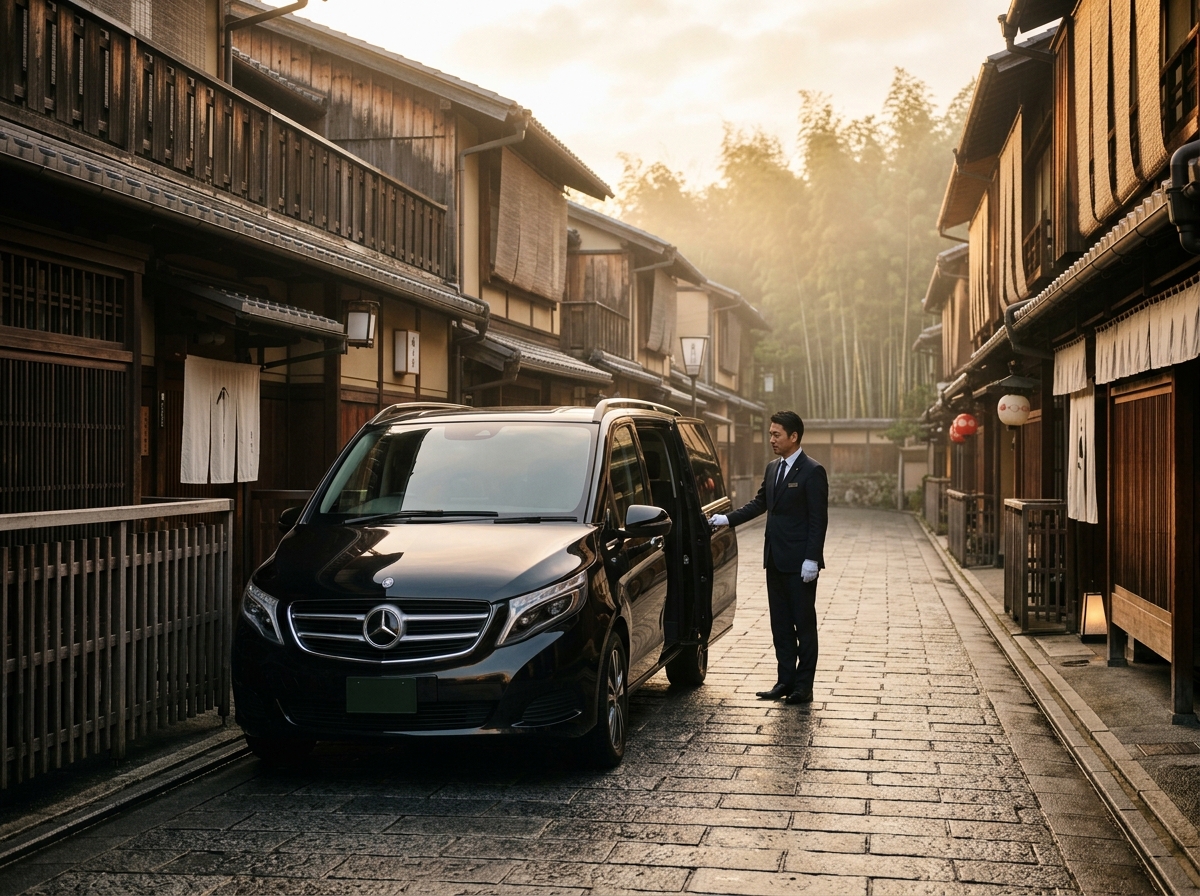
Private Executive Chauffeur Charter in Kyoto ✦ Door-to-Door Comfort
✦ The JAPAN PRIVÉ Solution

Door-to-Door Executive V-Class & Alphard Chauffeur Charters

For Kyoto–Nara–Osaka sightseeing or Tokyo–Mt. Fuji–Hakone transfers, a private Toyota Alphard Executive Lounge or Mercedes-Benz V-Class picks you up at your hotel lobby, stores up to 6 large suitcases effortlessly, and lets you customize your schedule on the fly.

Chapter 03 · Gastronomy & Counter Etiquette

Michelin Omakase, Kaiseki & High-End Sushi Etiquette

🍣 Fine Dining Protocol
🍣 Illustrated Guide · Counter Etiquette at Michelin Sushi & Kaiseki Dining
Dip Only the Fish Side

Never soak the white sushi rice (Shari) in soy sauce—and if the chef brushed glaze on top, eat it as is.

Rest Chopsticks Horizontally

Place chopstick tips on the ceramic rest (Hashi-oki). Never stick them vertically into a rice bowl.

Strictly Zero Perfume

Arrive completely fragrance-free so every guest can savor the delicate aroma of Hinoki, Dashi & Yuzu.

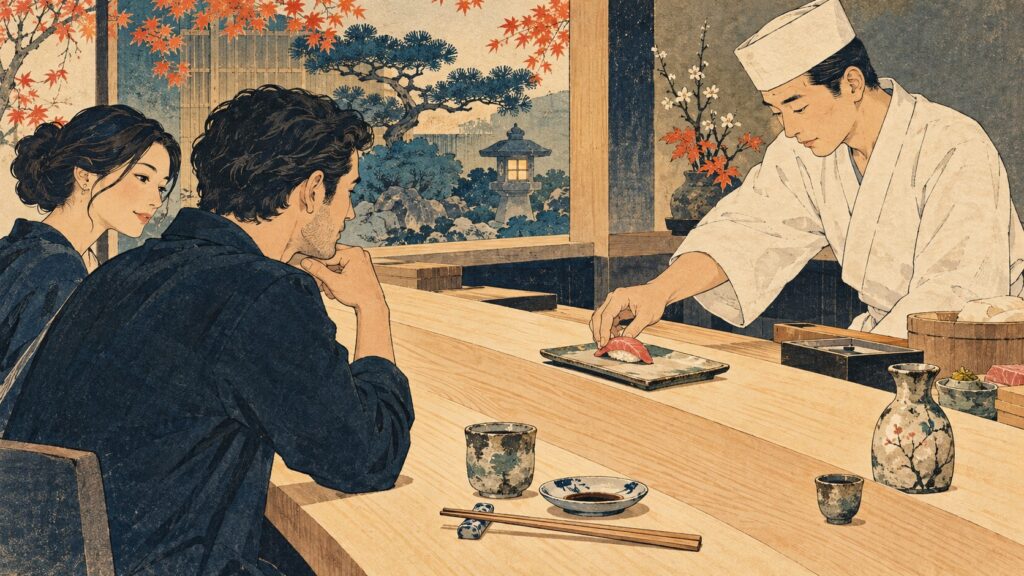
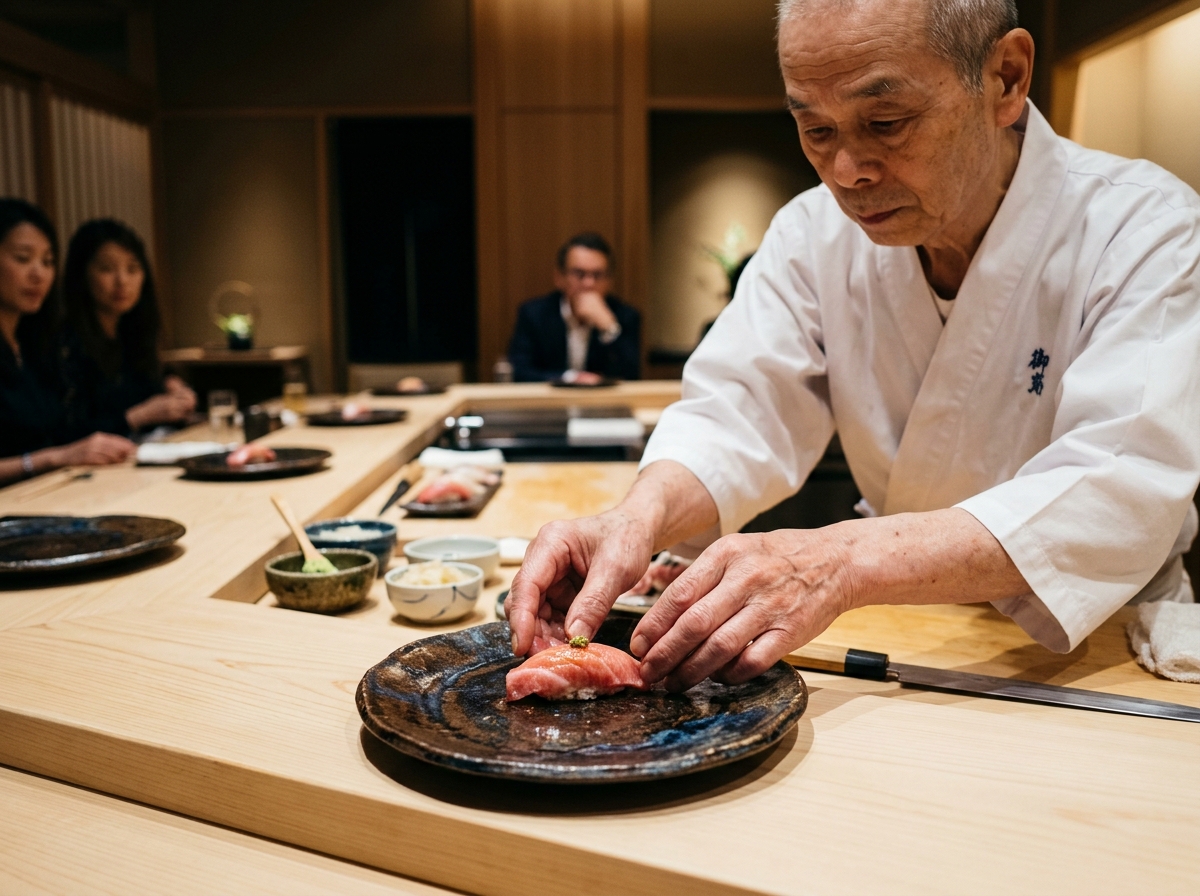
Tokyo and Kyoto hold more Michelin stars than any other cities on earth. At an intimate 8-seat Omakase ("I leave it to you, Chef") counter, the meal is a choreographed performance:

1. Fragrance-Free Policy

Never wear perfume, cologne, or scented hand lotion. Chefs spend decades perfecting the subtle aroma of aged fish, vinegar rice (Shari), and unpainted Hinoki cypress counters.

2. The 15-Second Sushi Rule

When the chef places a piece of Nigiri before you, eat it within 10–15 seconds while the rice is still body-temperature warm and the air pockets inside are intact. Fingers or chopsticks are both proper.

3. Soy Sauce & Ginger

If the chef has already brushed Nikiri soy glaze onto the fish, do not add extra soy sauce. Eat pickled ginger (Gari) between pieces to cleanse your palate—never place ginger on top of sushi.

4. Simultaneous Starts & No-Shows

Most top counters begin service for all guests at the exact same minute. Chefs purchase rare seafood at Toyosu Market specifically for your seat—late cancellations incur a 100% charge.

Master Sushi Chef serving Otoro Nigiri at a Hinoki Counter in Tokyo ✦ Edomae Mastery
✦ The JAPAN PRIVÉ Solution

Verified Michelin Omakase, Kobe Wagyu & Private Culinary Hosts

Many coveted Tokyo and Kyoto counters do not accept foreign phone numbers or walk-ins. Book through our verified partner reservations with English menu guidance, or pair your evening with a private culinary host.

Chapter 04 · Sacred Grounds & Geisha Districts

Shinto Shrines vs. Buddhist Temples & Kyoto’s Gion Etiquette

⛩️ Sacred Protocol
⛩️ Illustrated Guide · How to Pray at Shinto Shrines vs. Buddhist Temples
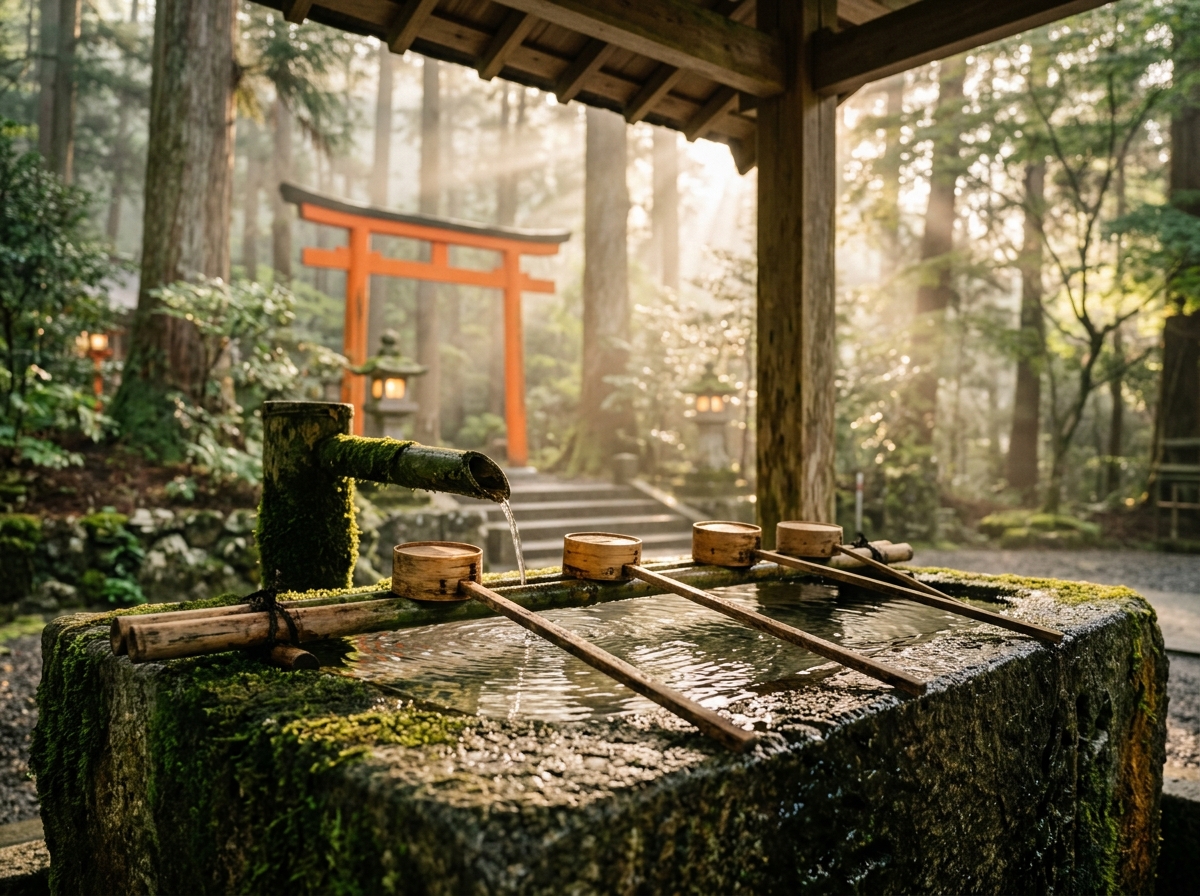
1. Temizuya Water Ladle

Rinse Left Hand → Right Hand → Mouth (in cupped left hand). Never drink directly from the bamboo ladle.

2. Shinto Shrine: 2-2-1

At a Shinto Shrine (Torii gate): Bow Twice deeply, Clap Twice, and Bow Once (Ni-rei Ni-hakushu Ichi-rei).

3. Buddhist Temple: Silent Bow

At a Buddhist Temple (incense burner): Press palms together silently (Gassho) and bow—never clap.

Knowing the difference between a Shinto Shrine (Jinja) and a Buddhist Temple (Otera) will enrich every sanctuary visit across Tokyo, Kyoto, and Nara:

⛩️ Shinto Shrines (Torii Gate)

1. Bow slightly before passing under the vermilion Torii gate, and walk along the edge of the path (the center Seichu is reserved for the deities).
2. Purify hands and mouth at the Temizuya water pavilion.
3. Toss a ¥5 or ¥50 coin gently, ring the bell, and perform 2 Bows, 2 Claps, 1 Final Bow.

☸️ Buddhist Temples (Sanmon Gate)

1. Step over—never onto—the raised wooden threshold at the main gate.
2. If there is a large bronze incense burner (Jokoro), waft the fragrant smoke toward your head for blessing.
3. Place a coin quietly, press your palms together in silent prayer (Gassho), and bow gently.

Kyoto Gion Private Alley Notice: Gion’s historic Hanamikoji side alleys are active residential and tea-house lanes. Stopping a Geiko or Maiko for selfies or entering private side streets is prohibited (¥10,000 municipal fine).

Kyoto Shinto Shrine Temizuya Water Purification Pavilion and Torii Gate ✦ Kyoto Sacred Heritage
✦ The JAPAN PRIVÉ Solution

Private Geisha (Maiko) Tea Salon & Exclusive Temple Access

Instead of standing on crowded streets, experience Kyoto’s living traditions from the inside. Reserve a private Ozashiki tea ceremony or kaiseki banquet with a genuine Maiko or Geiko—complete with an English cultural interpreter, classical dance, conversation, and commemorative photos.

Chapter 05 · Hospitality & Gratitude

No Tipping in Japan—And the Subtle Art of "Kokorozuke"

💴 VIP Insider Nuance
✉️ Illustrated Guide · Bare Cash vs. Traditional "Pochi-bukuro" Envelope
✕ Never Leave Bare Cash on Tables

Restaurants, taxis, and bars include service charges. Loose bills left behind will be chased down and returned to you.

✓ Use a "Pochi-bukuro" Envelope for Private Hosts

For a dedicated private chauffeur/guide or Ryokan Nakai-san, place crisp ¥3,000–¥5,000 notes inside a small decorative envelope.

In 99% of situations across Japan—restaurants, bars, hotel bell desks, and city taxis—tipping does not exist. Fine hotels and restaurants automatically include a 10%–15% service charge (Sabisu-ryo) on the final bill.

However, in traditional Japanese high society, there is a refined custom known as Kokorozuke (心付け — "from the heart"), used only in two special private contexts:

  • 1. A Dedicated Private Guide or Chauffeur who accompanies your family for a full day or multi-day bespoke itinerary.
  • 2. A Traditional Luxury Ryokan Room Attendant (Nakai-san) who personally serves your multi-course in-room Kaiseki dinner and prepares your futon.

The Golden Rule of Kokorozuke: Never Hand Bare Cash If you wish to offer a gratuity (typically ¥3,000–¥5,000), place crisp, unfolded bills inside a small decorative Japanese paper envelope (Pochi-bukuro, available at any stationery shop or hotel boutique) and present it with both hands and a warm "Arigatou gozaimasu".

Traditional Japanese Washi Pochi-bukuro Envelope with Mizuhiki Cord on Tatami ✦ The Art of Omotenashi
💡 Another Appreciated Gesture: "Omiyage"

Bringing a Small Souvenir from Your Home City

In Japan, gifting a small, beautifully wrapped specialty treat from your hometown (such as artisanal chocolates, local honey, or tea) to your private guide or Ryokan host is often cherished even more than cash—and sparks wonderful conversation.

Chapter 06 · Seasonal Meteorology & Timing

Why Afternoon Ground Tours Often Miss Mt. Fuji’s Summit

🗻 Sightseeing Strategy
☀️ Illustrated Guide · Morning Aerial Clarity vs. Afternoon Ground Cloud Deck
✓ 07:00 AM – 10:30 AM (Clear Summit & Sky Charter)

Cool morning air keeps the 12,388 ft peak crystal clear—and private helicopters cruise above any low valley haze in 35 mins.

✕ After 11:30 AM (Rising Humidity Cloud Curtain)

Solar warming pulls moisture up from Suruga Bay, wrapping the summit in clouds right when 3-hour highway buses arrive.

One of the most common disappointments for first-time visitors is booking a standard 10-hour group bus tour from Tokyo to Mount Fuji, arriving at midday, and seeing only a wall of white fog.

  • The 11:00 AM Cloud Deck: As solar heat warms Suruga Bay and the Fuji Five Lakes basin late in the morning, rising moisture condenses around the mountain between 5,000 and 10,000 feet—frequently obscuring ground-level views after 11:00 AM (especially from April through October).
  • Best Months vs. Best Hours: Winter (November–February) offers the highest all-day clarity (~70%), whereas spring and summer reward early-morning departures (7:00 AM–10:30 AM) or aerial perspectives above low valley clouds.
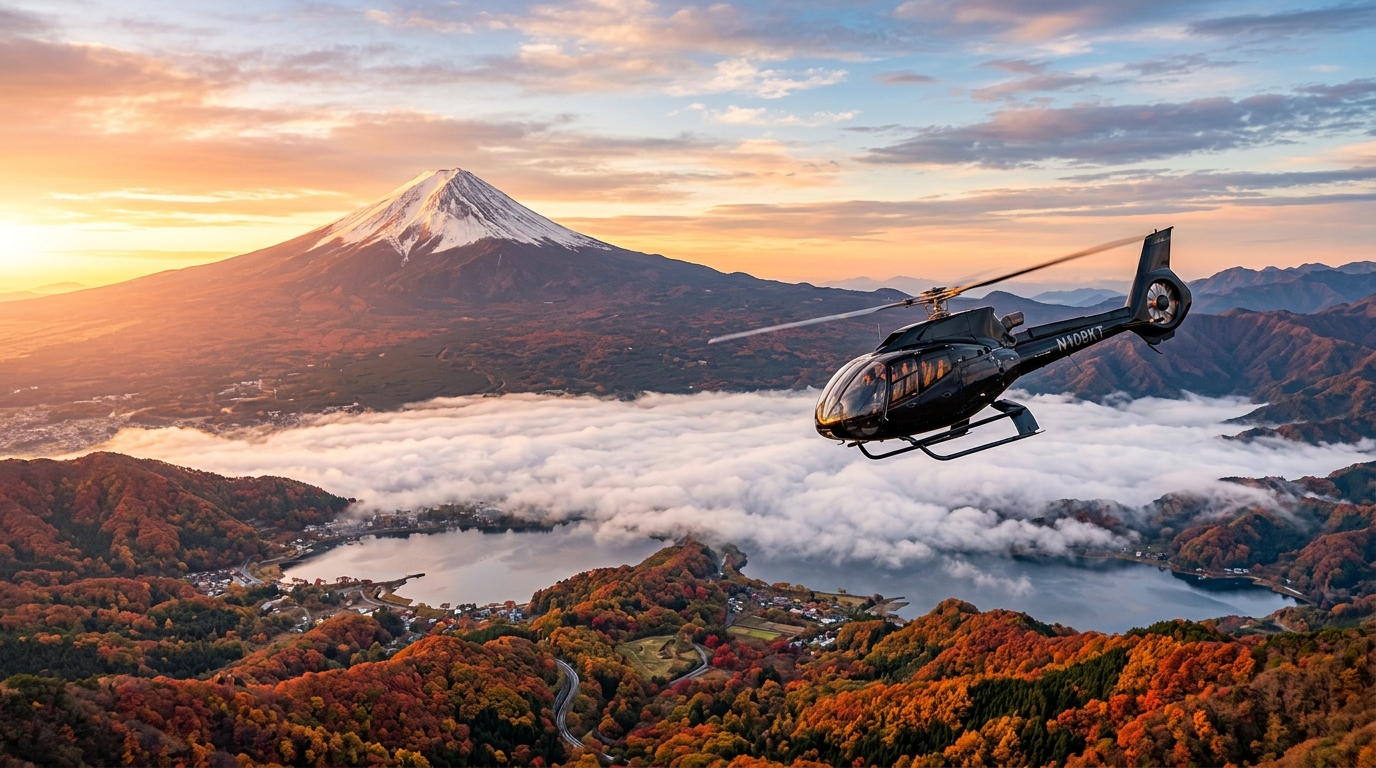
Aerial view of Mt. Fuji summit from a private charter helicopter ✦ Above the Clouds
✦ The JAPAN PRIVÉ Solution

Morning Private Helicopter Charter or Overnight Fuji-View Ryokan

Fly directly from Tokyo Heliport to Mount Fuji and Lake Ashi in just 35 minutes each way during peak morning visibility—or spend the night in a Lake Kawaguchiko luxury suite to witness the crystal-clear sunrise Akafuji (Red Fuji) glow from your private bath.

Cultural Fluency · Spoken Grace

8 Phrases That Open Every Door in Japan

Even when accompanied by an English-speaking host, speaking these eight phrases at a sushi counter or ryokan creates an immediate bond of warmth.

🙏 Before a Meal
Itadakimasu
ee-tah-dah-kee-mahs (いただきます)

"I humbly receive this meal." Spoken with palms lightly together before picking up your chopsticks.

🍵 To the Chef / After Dining
Gochisousama deshita
go-chee-so-sah-mah desh-tah (ごちそうさまでした)

"Thank you for this feast." The highest compliment you can say to a sushi chef or kaiseki host as you leave.

🍶 At the Counter / Sommelier
Omakase shimasu
oh-mah-kah-seh shee-mahs (おまかせします)

"I entrust the selection to you." Ideal when asking a chef or sake sommelier for their finest seasonal pairing.

🎐 Polite Attention / Pardon
Sumimasen
soo-mee-mah-sen (すみません)

"Excuse me / Pardon me." Used gently to catch a server’s attention, pass through a crowd, or express polite thanks.

✨ Sincere Gratitude
Arigatou gozaimasu
ah-ree-gah-toh go-zai-mahs (ありがとうございます)

"Thank you very much." Paired with a gentle 15-degree nod of the head.

🚪 Entering a Tatami Room
Shitsurei shimasu
sheet-soo-rei shee-mahs (失礼します)

"Pardon my intrusion." Spoken softly when entering a private tatami room, tea house, or boutique fitting room.

🥢 Asking for the Best Dish
Osusume wa?
oh-soo-soo-meh wah? (おすすめは?)

"What is your recommendation today?" Invites the host to share the day’s rarest seasonal specialty.

🧾 Requesting the Bill
Okaikei onegaishimasu
oh-kai-kei oh-neh-gai-shee-mahs (お会計お願いします)

"The check, please." You can also cross both index fingers into a small "X" sign quietly toward your server.

Continue Reading · Deep-Dive Editorial Series

In-Depth Cultural Guides & Curated Comparisons

Explore All 30 Curated VIP Tours →