
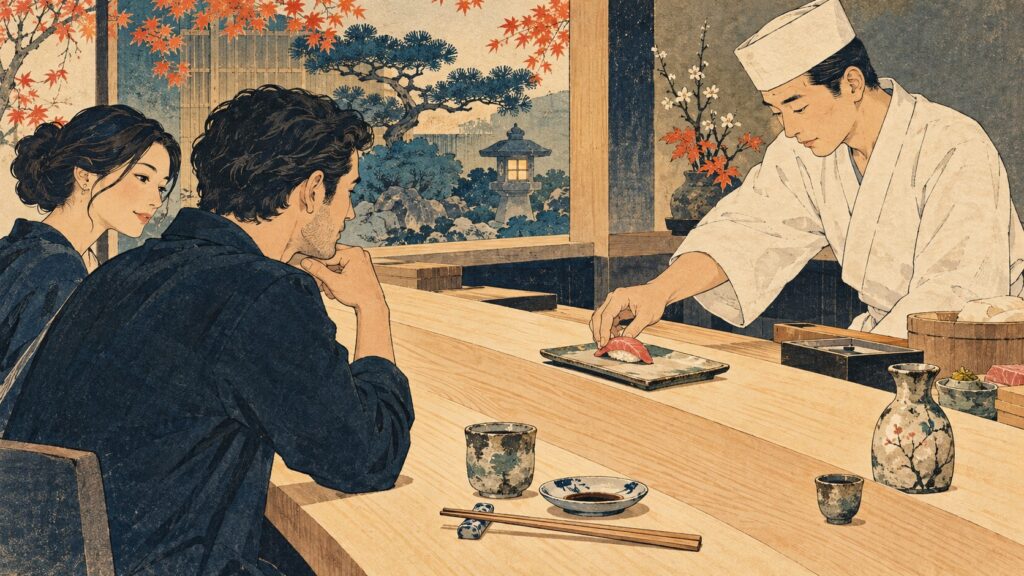
Dining at an intimate 8-seat Michelin Omakase sushi counter in Ginza or a centuries-old Kaiseki Ryotei in Kyoto is one of the highlights of a luxury journey to Japan. Because the counter places you inches from the master chef (Itamae), observing a few timeless customs transforms the evening into a warm cultural exchange.
1. Arrive 100% Fragrance-Free (No Perfume or Cologne)
Japanese haute cuisine relies on whisper-quiet aromas: smoky bonito dashi, freshly grated Shizuoka wasabi, citrusy yuzu peel, and the natural scent of an unpainted 200-year-old Hinoki cypress counter. Many Michelin-starred sushi chefs explicitly state that guests wearing perfume or strong aftershave will not be seated.
2. The 15-Second Nigiri Rule & Fish-Side Soy Dip
Traditional Edomae nigiri is served with vinegar-seasoned rice (shari) warmed to human body temperature and shaped with delicate air pockets so it melts on the tongue. Eat each piece within 10–15 seconds of placement using either your fingers or chopsticks. If dipping in soy sauce, turn the piece on its side and touch only the fish topping to the soy—never soak the rice, and never add soy sauce if the chef has already brushed glaze (Nikiri) across the fish.
3. Chopstick Taboos & Tatami Footwear
Rest your chopsticks horizontally on the ceramic holder (Hashi-oki) between bites—never stand them vertically in rice or pass food directly from chopstick to chopstick. When visiting a traditional Kaiseki restaurant with tatami rooms, always wear clean socks.
Curated Experience
ℹ️ Displayed price is an editorial reference estimate (Updated Oct 17, 2026). Live rates and plans on partner booking sites fluctuate based on travel date, duration, group size, and exchange rates.